Storytelling is Kindness
Reflections after Reading Annie Ernaux’s Simple Passion, while reading Colum McCann’s Apeirogon, while preparing to give a talk in the Morgan Museum’s exhibit 3000 Years of Story and Storytelling while we wake up to a war in the Middle East, following a blizzard in Manhattan, and a drought in Denver.
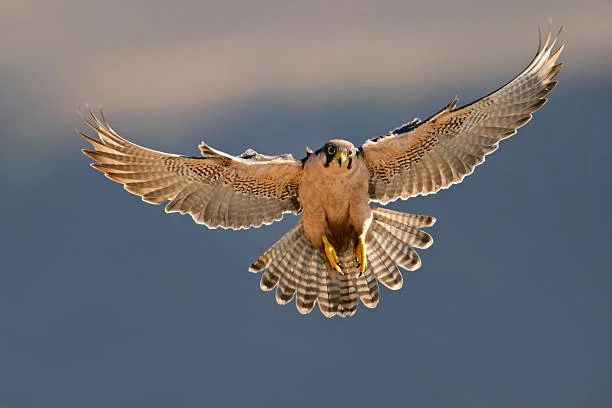
falcon
I began reading A SIMPLE PLEASURE by Annie Ernaux as soon as I finished reading The Forty Rules of Love by Elif Shafak. I had indulged myself in Shafak’s novels, suspecting that I was at heart a Sufi. I found inspiration and relief from the story within a story, albeit sometimes tragic, as opposed to the distress and disgust I felt reading the news. I left Apeirogon, which I was also reading, by Colum McCann half read. It is one of the most distinctly beautiful and disturbing books I have ever read. It demanded another kind of heart break, inspiration and concentration. It is shaped into 1001 chapters, not chronological like the Nights, yet a revelation of storytelling. Both books remind me that a real story is a constant reminder of what cannot be explained, extinguished or understood that underlies it all.
Apeirogon is about story telling as truth telling, the possibility of peace and love exposes unconditional compassion beyond ideas , bias , or conventions. The chapter I was involved in, when I put down the book, moved from descriptions of rare falcons captured deceptively by children to make money for bread in one country, to the ownership of the same rare falcons by wealthy individuals who had hoods, adorned with gold and jewels, made to keep the rare birds on display in cages. Those chapters shifted seamlessly to pages about an Arabic prisoner using his hand to activate an antenna to see a documentary about the holocaust after crushing a cockroach that crawled through the dirty plaster walls of his cell. He thought he would revel in the death of Jews, but instead felt the horror of cruelty, which was familiar - the ever presence of violence. He unexpectedly had compassion for his enemy. It led years later to his studying the Shoah in a university in England and then publically sharing the details of the loss of his daughter by an Israeli bullet at a checkpoint. He shared the telling of these tales with an Israeli father who had lost his daughter to a suicide bomber. Their friendship growing is the understory .
I had to put off reading Ernaux’s book again because I needed two days preparing for a gallery talk about storytelling I was giving for an exhibition at The Morgan Library called 3000 Years of Story and Storytelling. To speak I stood in front of a gigantic print of two versions of one page of the Odyssey. Different translations. Most words were faded, unreadable, as if the paper had fallen into an ocean. One sentence on each page was about Odysseus returning home, in English, vivid. I thought of Penelope waiting. How difficult it is to return from war is manifest in his journey. I had an image of my father at the dinner table telling us about his years as a colonel in the army during World War II. Some of the stories he told over again were about leaving home, Seeing his five month old son perhaps for the last time, and meeting his brother on D Day unexpectedly. My father returned home in uniform to a boy who did not recognize him. A story he told as if it was funny. The most vivid memory I have was realizing that those years my father spoke of - actually did not tell us much about -what he actually saw was not mentioned - were savored, longed for. It was a time of being fully alive in the midst of horror and violence. All illusions removed, faded into the background. My brother and I knew about his affair with a Japanese woman. There were hundreds of small photographs of her in a kimono, in a cardboard box in the attic. They were mixed with lined papers on which he wrote letters to our mother, redacted, about how much he loved and missed her.
Finally, yesterday, I made a pot of coffee. However, before I reopened SIMPLE PASSION, I scrolled through my phone: the US and Israel had attacked Iran. The article was about a school that was bombed. Children maimed. Dust and Smoke. Terror. It shook my morning’s waking comfort. The unbearable yet not unexpected bombings by two dictators against one dictator. It coughed with nausea. My daughter in law is from Tehran. Her family lives in Isfahan. My son is wildly in love with her. He is an ex child soldier from Sierra Leone. Afraid, once that he was losing her, we drove round and around for hours. For the first time he shared his terror of her not loving him as he loved her. He never spoke of the war in that way, or the death of his parents during the conflagration.
I closed my phone. Swiftly, I read Ernaux’s book in one sitting. I was unable to put it down. Even in translation it is beautifully written. I savored Its rawness and disturbing details, too familiar. Obsession that disturbs every day and night. It was too descriptive of her illicit love affair,. It reminded me of what it was actually like to find myself unable to overcome compulsion and longing, fantasy, agony and bliss when I fell in love with a married man. The single chapter on the war with Iraq that appears in the book nearly did me in. And the end of the book: the visceral sense of the rawness of the compulsive love affair, impossible to fulfill – the distraction and engagement, its’ unnerving satisfaction with endless desire that made it alluring. It seized me with the reality of our obsession with war. And, a fear of being completely alive, changing erupting like weather. Not daring to speak about such sexual compulsion or death .. is that what underlies our love of violence and destruction. A delusion that we can destroy what we do not want.
The Squeaky Door is a children’s picture book I wrote over thirty years ago. Author Ernaux wrote to me about her delight in the book. She wrote about how important it was to reveal and feel fear. Reading her book, I remembered the insides of obsession which was like riding a wild horse made of fear, on fire, beyond what I knew until that time. I almost lost my career and many friends in those years. It hardly mattered. I had to rethink Squeaky Door.
In truth, I never gave much thought to the story, from Puerto Rico, retold, until she wrote to me about fear. Suddenly I could make more sense of the attention of huge audiences of chaotic school children, and distressed displaced persons, young and old in a camp in Haiti, to whom I told Squeaky Door many times. . I was always stunned at the attention. Total devotion into the living of the story once I asked the question: had ever been afraid of the dark? Hands shot up. A delightful fear acknowledged. It became an impassioned call and response event. Children could stomp their feet with abandon and aggression as they repeated the words screeched by the grandmother unable to sleep - “You are driving me crazy!!” Then reliving darkness descending as she closed the light and left her grandchild in the dark. All arms rose up joyfully in unison drawing down the night, before the door squeaked, and the boy cried, and leaped under his bed as if he could escape fear - to only have it occur again and again. Being, in the story, making the story that rose spontaneously in their imaginations, the children relived their fear, transforming it, and conducting their own symphony of terror; rather than being overwhelmed by it. The situation in the story grew increasingly intense. It was humorous, unimaginable, scary and wonderful to be in bed with a pig and a snake and a horse and still be afraid. The secret joy of Little Red Riding Hood in bed with a wolf, who dressed like her grandmother, popped into my mind.
The obsessed woman in Simple Passion that I read never drinking the French coffee I love, was dwelling in her unzipped passion needing contact with her lover. She was lIttle red riding hood, the grandmother and the wolf - not different than those children who screamed, wept and shivered under the bed together during the storytelling. I had to sometimes tell the story again, adding more activities, larger animals, wilder emotions as suspense intensified. No one in the school administration knew what I was doing. Even the Sherrif who once warned me that I could never use the word “witch” in his schools didn’t suspect what we were about. We were making alchemy turning terror into gold. I never shied away from letting the children cross over from politeness to utter abandon. It was only a story the teachers thought. Then there was the subservice bringing them back to the room and themselves - a practice in overcoming and living with the unimaginable. The storytelling was giving them a means to feel and to live with what frightened them. And what frightens us all. Abandonment. Violence. Change. Loving too much to contain by reason.
Have I wandered away from the book? I don’t’ think so. One story leans on another. All the books were whispering from the children’s story to the huge endeavor of Apeirogon. Simple Passion, Ernaux’s book that won her a Nobel Peace Prize in Literature, continues to haunt me. The story unraveled with honesty.. Its length was its depth not the number of pages. The last encounter with the lover years later ended with no regret. I had to sit and consider how much I had regretted my love affair, but also never really regretted it since I felt it was unavoidable. A recognition of how we are taught to subdue and recoil from the depth of living feeling undiluted passion came to meet me. It is a daring book. It reminds me of Helene Cixous speaking about a story being an axe. Ritual, myth, storytelling and ceremony is lived story, alive in the moment, lets us die and be reborn, lets us feel the female depth of beingness, sexuality,
and then, return, opened, and still whole. Persephone drawn into the underworld terrified, later falling in love with Hades, healing his faceless face. and eating forbidden seeds so she had to return. Wim Wenders filmmaker attempted to make a film that had no narrative and found it impossible. Unrelated pieces of footage tied together randomly were always interpreted. Watchers made meaning. We make stories all the time. He wrote in conclusion, “All stories are lies. But we cannot live without them.”
Laura. March 2, 2026
Ernaux, Annie. SIMPLE PASSION, Seven Stories Press, NY
McCann, Colum APEIROGON, Random House, NY
Shafak, Elif, FORTY RULES OF LOVE, Penguin Books, NY
Simms, Laura THE SQUEAKY DOOR, Crown Books. (out of print) NY
Exhibit at Morgan Museum: 3000 Years of Story and Storytelling, through May 2, NY
\